Physical Address
304 North Cardinal St.
Dorchester Center, MA 02124
Physical Address
304 North Cardinal St.
Dorchester Center, MA 02124

In 1955, Tennessee Ernie Ford released “16 Tons,” a song that would not only define his career but also become one of the most enduring anthems of working-class struggle in American music history.
The track’s stark portrayal of debt, labor, and hopelessness struck a chord with millions during the postwar industrial boom.
It topped the Billboard charts for eight consecutive weeks and sold over four million copies, establishing itself as a cultural milestone.
With its smoky delivery and finger-snapping arrangement, “16 Tons” stood apart from the cheerful pop dominating the airwaves, announcing a different kind of truth.
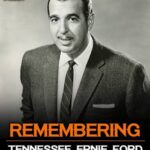
Ernest Jennings Ford, born in Bristol, Tennessee in 1919, started his professional journey as a radio announcer before becoming a baritone vocalist in the country and gospel traditions.
A veteran of World War II and a natural storyteller, Ford blended country, gospel, and pop into a signature style that appealed to a wide American audience.
His deep voice had a warmth that masked its bite, capable of both comforting and confronting listeners.
By the time “16 Tons” arrived, Ford had already gained moderate fame through his work on radio and television, but this song launched him into another stratosphere.
The origin of “16 Tons” goes back to Merle Travis, a singer-songwriter and guitarist from Kentucky who wrote the song in 1946.
Travis drew inspiration from his own family’s experience in coal mines, particularly a phrase his father used to describe the oppressive “company store” system: “You load sixteen tons, and what do you get? Another day older and deeper in debt.”
Ford, having previously recorded several Travis songs, saw the potential in this one as a standalone single—and his interpretation would soon overshadow the original in both scale and impact.
Ford’s recording of “16 Tons” was produced by Lee Gillette and released on Capitol Records.
The production was notably spare for the time.
Instead of lush orchestration, the arrangement leaned on a muted guitar, a snap rhythm for percussion, and Ford’s cavernous voice front and center.
The minimalist approach created a hypnotic effect, allowing the lyrics to land with gravity.
The decision to feature finger-snapping instead of drums gave the song a unique pulse—part swing, part march, all tension.

Upon its release, “16 Tons” was an instant sensation.
It soared to No. 1 on both the Billboard country and pop charts, a rare crossover achievement that underscored the song’s universal appeal.
The single sold over one million copies in its first month and received a gold record shortly thereafter.
Its popularity extended overseas, charting in the UK and introducing Ford’s voice to a global audience.
It became one of the most commercially successful songs of the 1950s and earned Ford a Grammy nomination years before the awards were formally established.
Beyond its commercial success, “16 Tons” had a massive cultural impact.
In a decade often remembered for its optimism and suburban sprawl, the song told a different story: one of labor exploitation, economic entrapment, and quiet defiance.
It brought the experiences of coal miners and blue-collar workers into the mainstream conversation, decades before protest songs and folk revivalists would do the same.
Its somber tone offered a contrast to the more sanitized portrayals of American life in popular media.
For Tennessee Ernie Ford, “16 Tons” marked a turning point in his career.
It elevated him from a country entertainer to a household name, and he soon found himself hosting The Ford Show on NBC, where he brought country, gospel, and pop music to millions of living rooms each week.
The song’s success gave Ford the platform to explore more serious themes in his music, and he leaned into that opportunity with confidence and conviction.
The influence of “16 Tons” reached beyond Ford himself.
The song inspired a wave of interest in socially conscious music, paving the way for artists like Johnny Cash and Woody Guthrie to gain broader appeal.
It showed that American audiences were willing to engage with songs that spoke directly to economic injustice and the cost of labor, even if wrapped in commercial packaging.
Over the years, “16 Tons” has been covered by dozens of artists across multiple genres.

Johnny Cash, Tom Jones, Bo Diddley, and B.B. King all recorded their own interpretations, each adding a new layer of meaning.
Yet none matched the stark authority of Ford’s original version, which remains the definitive take thanks to its restraint and emotional weight.
At the time of the song’s release, America was in the midst of a transition—industrially, politically, and culturally.
Ford’s performance captured the tension of an era where economic growth didn’t always translate to personal security.
His weary, knowing tone suggested a deep understanding of that contradiction, and listeners responded to the authenticity.
Even decades later, “16 Tons” continues to enjoy lasting resonance.
It appears regularly in films, commercials, and retrospectives on Americana.
Its lyrical content still finds relevance in modern conversations about labor, inequality, and debt.
Radio stations across the U.S. still spin it, especially in working-class towns where its message continues to ring true.
Musically, “16 Tons” showed how a minimalist approach could carry profound emotional power.
Its influence is felt in everything from country ballads to stripped-down blues recordings.
It taught producers and artists alike that sometimes less is more—and that space in music can be as expressive as sound.
Though Tennessee Ernie Ford passed away in 1991, his legacy endures—forever linked to this timeless anthem.
In 1990, just a year before his death, he received the Presidential Medal of Freedom, a fitting recognition for an artist whose voice helped shape the conscience of a nation.

Class Tensions and Transforms Pop with Bittersweet Irony – Story of the…
HOMEMtasanMay 14, 2026 The Kinks’ ‘Sunny Afternoon’ Captures 1966’s Class Tensions and Transforms Pop with Bitterswe…Redefined Heartache and Shaped Pop’s Emotional Core in 1960 – Page 2 of…The Birth of a New Kind of HeartbreakWhen Only the Lonely arrived in 1960, Roy Orbison didn’t just release a hit—he reshaped how e…John Anderson’s “Swingin’” Breaks the Mold and Puts Country Swagger Back…In 1983, John Anderson’s “Swingin’” burst onto the country music scene with an infectious groove that challenged the norm and rede…
“16 Tons” remains the song most closely associated with his name, a calling card that transcends genre.
In the end, “16 Tons” is more than just a hit—it’s a cultural artifact.
https://www.youtube.com/embed/S1980WfKC0ohttps://www.youtube.com/embed/RRh0QiXyZSk4 minutes read